
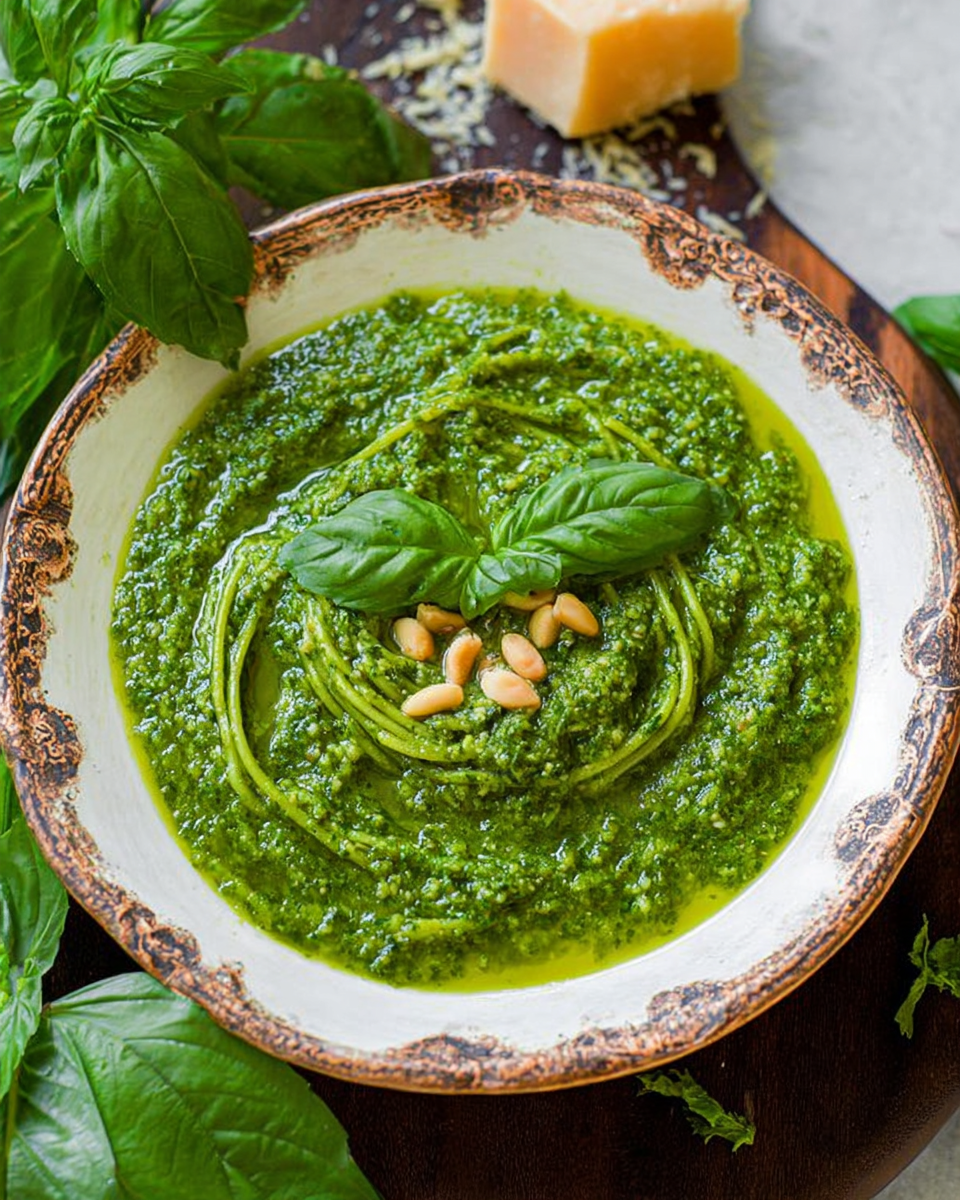
Tired of bland, uninspiring pasta dishes that leave your taste buds wanting more? Basil pesto is the vibrant, aromatic solution that transforms ordinary meals into extraordinary culinary experiences. This verdant sauce bursts with fresh flavors and brings an immediate upgrade to practically any dish it touches.
As someone who’s been crafting homemade pestos for over a decade, I’ve perfected this traditional Italian sauce to deliver maximum flavor with minimal effort. The balance of fresh basil, nuts, cheese, and olive oil creates a harmony that’s both comforting and sophisticated.
In this guide, you’ll discover everything you need to know about creating authentic basil pesto at home – from selecting the freshest ingredients and proper preparation techniques to storage tips and creative serving suggestions that will expand your pesto horizons beyond pasta.
Why This Basil Pesto Recipe Works
- Uses readily available ingredients that transform into something greater than their sum
- Comes together in just 10 minutes with minimal equipment
- Versatile enough for pasta, sandwiches, soups, and dozens of other applications
- Freezes beautifully, allowing you to preserve summer’s basil bounty year-round
- Customizable to accommodate dietary preferences without sacrificing flavor
Choosing the Right Ingredients for Basil Pesto
Best Basil Varieties for Pesto
Sweet Italian basil (Genovese basil) is the gold standard for traditional pesto, offering the perfect balance of sweetness, pepperiness, and anise notes. Its broad, tender leaves provide abundant flavor oils that release beautifully when processed. For something different, try Thai basil for a more licorice-forward profile, or mix in other herbs like parsley or mint for unique variations.
Buying Tips
Look for basil with vibrant green leaves without any browning or wilting. The stems should be firm, and the leaves should have a strong, fresh aroma when gently rubbed. Whenever possible, choose organic basil to avoid pesticide residues, as the leaves will be used raw.
Substitutions
If basil is unavailable or prohibitively expensive, substitute with equal parts spinach and a smaller amount of basil, or try making alternative pestos with arugula, kale, or even carrot tops. Each creates a distinct flavor profile while maintaining the essence of a fresh, versatile sauce.
Ingredients & Prep for Basil Pesto
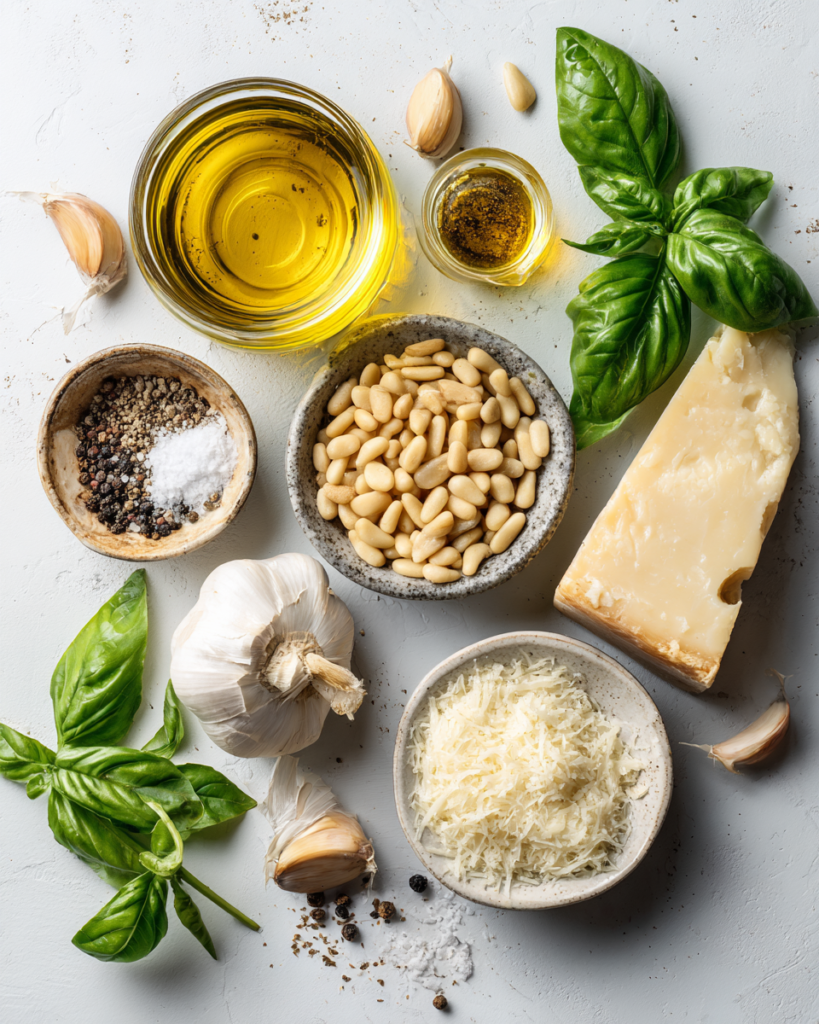
Pesto Essentials
- Basil preparation: Remove leaves from stems and wash gently; thoroughly dry using a salad spinner or clean kitchen towels to prevent a watery pesto.
- Nuts: Toast pine nuts lightly in a dry skillet until fragrant (about 3-5 minutes) to enhance their natural oils and flavors.
- Garlic prep: For milder flavor, remove the green germ from garlic cloves; for more pungency, use the entire clove.
Pesto Base Ingredients
- 2 cups fresh basil leaves, packed
- ⅓ cup pine nuts, lightly toasted
- 2-3 garlic cloves, peeled
- ½ cup freshly grated Parmigiano-Reggiano
- ¼ cup freshly grated Pecorino Romano (or additional Parmigiano)
- ½-⅔ cup extra virgin olive oil
- ¼ teaspoon sea salt (adjust to taste)
- Freshly ground black pepper
Pantry Essentials
Extra virgin olive oil is crucial—use the highest quality you can afford, as its flavor will be prominent. The traditional cheese blend uses both Parmigiano-Reggiano and Pecorino Romano, but you can adjust based on availability and preference.
Step-by-Step Basil Pesto Making Instructions
Pre-Cooking Basil Pesto Prep
- Wash basil leaves thoroughly and dry completely (moisture is the enemy of good pesto).
- Toast pine nuts in a dry skillet over medium heat until lightly golden and fragrant, about 3-5 minutes. Watch carefully as they burn quickly!
- Peel garlic cloves and remove the bitter center germ if desired.
- Grate cheeses freshly for the best flavor and texture.
Basil Pesto Preparation Method
- Add basil leaves, toasted pine nuts, and garlic to a food processor. Pulse several times until coarsely chopped.
- Add grated cheeses, salt, and a few grinds of black pepper. Pulse again to combine.
- With the processor running, slowly drizzle in olive oil through the feed tube until desired consistency is reached.
- Taste and adjust seasoning as needed—add more salt, pepper, cheese, or even a squeeze of lemon juice to brighten flavors.
Consistency Check for Basil Pesto
The perfect pesto should be somewhat textured, not completely smooth. It should have a glossy appearance from the emulsified oil and be thick enough to coat the back of a spoon but loose enough to easily toss with pasta.
Resting Basil Pesto
For the best flavor development, allow your freshly made pesto to rest at room temperature for 15-30 minutes before using. This gives the ingredients time to meld together and the flavors to fully bloom.
Looking for more Mediterranean-inspired recipes? Check out our guide to mastering flaky sweet almond pastry for a perfect complement to your pesto dishes.
Pro Tips for Perfect Basil Pesto
Avoiding Browning and Oxidation in Basil Pesto
- Blanch basil leaves in boiling water for 5-10 seconds, then immediately plunge into ice water to preserve the vibrant green color.
- Add a thin layer of olive oil on top of stored pesto to create an air barrier.
- Include a tablespoon of fresh lemon juice which acts as a natural antioxidant.
Tool Recommendations for Basil Pesto
- A food processor creates ideal texture, but a mortar and pestle produces the most authentic, rustic result with superior flavor release.
- Use a microplane for finely grating hard cheeses without clumping.
- Invest in a quality olive oil dispenser with a controlled pour for precise drizzling.
Storage & Preserving Basil Pesto
- Refrigerate fresh pesto in an airtight container with a thin layer of olive oil on top for up to 5 days.
- Freeze in ice cube trays, then transfer to freezer bags for single-serving portions that last up to 6 months.
- For longer preservation, omit cheese before freezing and add it fresh when serving.
For more culinary inspiration and recipe ideas, check out our Pinterest collection where we share stunning food photography and creative cooking tips.
Flavor Variations for Basil Pesto
Spicy Basil Pesto Twist
Transform traditional pesto with a kick of heat by adding a pinch of red pepper flakes or a small fresh chili. For a more complex spicy profile, incorporate a teaspoon of harissa paste or a roasted jalapeño for depth along with the heat.
Dairy-Free Basil Pesto
Create a vegan version by substituting nutritional yeast for the cheese (¼ cup) and adding an extra tablespoon of pine nuts or a tablespoon of white miso paste for umami depth. A squeeze of lemon juice brightens the flavor profile and compensates for the missing cheese tang.
Global Basil Pesto Flavors
| Variation | Key Ingredients | Best Used With |
|---|---|---|
| Thai Pesto | Thai basil, cashews, fish sauce, lime | Rice noodles, grilled fish |
| Mexican Pesto | Cilantro, pepitas, cotija cheese | Tacos, grilled chicken |
| Mediterranean Pesto | Basil, sun-dried tomatoes, walnuts | Roasted vegetables, fish |
| Japanese Pesto | Shiso leaves, sesame seeds, miso | Rice bowls, steamed fish |
Serving Suggestions for Basil Pesto
- Classic applications: Toss with hot pasta, spread on crusty bread, or use as a pizza base instead of tomato sauce.
- Protein pairings: Spoon over grilled chicken, fish, or steak for an instant flavor upgrade.
- Vegetable enhancement: Drizzle over roasted vegetables, stir into mashed potatoes, or use as a dressing for grain bowls.
- Unexpected uses: Whisk into scrambled eggs, blend into hummus, or mix into mayonnaise for sandwiches.
Beverage pairings: Enjoy pesto dishes with crisp white wines like Sauvignon Blanc or Pinot Grigio, which complement the herbaceous notes without overwhelming them.
FAQs About Basil Pesto
Can I make basil pesto without pine nuts?
Absolutely! Walnuts, almonds, pistachios, or even sunflower seeds make excellent substitutions. Each will impart a slightly different flavor profile but work well in the basic recipe.
How do I prevent my basil pesto from turning brown?
The browning is oxidation, similar to what happens with avocados. Blanch your basil briefly before making pesto, add a layer of olive oil on top when storing, and incorporate a small amount of lemon juice in your recipe.
Is basil pesto healthy?
Yes! Basil pesto contains heart-healthy olive oil, antioxidant-rich herbs, nutrient-dense nuts, and protein from cheese. It’s calorie-dense, so portion control is key, but it’s packed with beneficial nutrients.
Can I make basil pesto without a food processor?
Yes, the traditional method uses a mortar and pestle, which many chefs prefer for superior texture and flavor release. In a pinch, you can also finely chop all ingredients by hand and mix together.
Conclusion
Basil pesto isn’t just a sauce—it’s a culinary game-changer that can elevate everything from simple pasta to complex main dishes. Its vibrant green color, aromatic fragrance, and complex flavor profile make it one of the most versatile additions to your cooking repertoire.
The beauty of homemade pesto lies in its simplicity and adaptability. Once you’ve mastered the basic technique, you’ll find yourself experimenting with different herbs, nuts, and applications that reflect your personal taste and available ingredients.
Don’t wait for a special occasion to bring this Italian classic into your kitchen. Grab a bunch of fresh basil today and transform it into a sauce that will brighten your meals all week long. Your taste buds will thank you!
Print
1. Basil Pesto: The Aromatic Delight You Need to Try
- Total Time: 10 mins
- Yield: 1 cup 1x
Description
This classic Basil Pesto is a vibrant, aromatic delight — bursting with the fresh flavors of basil, garlic, pine nuts, and Parmesan cheese, all blended together with rich olive oil for the perfect smooth and savory sauce. It’s incredibly versatile and can elevate pasta, sandwiches, meats, or roasted vegetables in minutes.
Ingredients
2 cups fresh basil leaves, packed
1/2 cup grated Parmesan cheese
1/3 cup pine nuts (or walnuts)
2 garlic cloves, peeled
1/2 cup extra virgin olive oil
1/2 tsp salt
1/4 tsp black pepper
1 tsp lemon juice (optional, for brightness)
Instructions
1. Add basil leaves, Parmesan cheese, pine nuts, and garlic to a food processor.
2. Pulse several times until the ingredients are finely chopped.
3. With the machine running, slowly drizzle in olive oil until the mixture becomes smooth and emulsified.
4. Season with salt, pepper, and lemon juice to taste.
5. Transfer to a jar or bowl and cover tightly until ready to use.
Notes
Store pesto in an airtight container in the refrigerator for up to one week.
For longer storage, freeze in ice cube trays for easy portioning.
To prevent browning, pour a thin layer of olive oil on top before storing.
Use pesto as a pasta sauce, sandwich spread, or dip for a burst of fresh flavor.
- Prep Time: 10 mins
- Cook Time: 0 mins
- Category: Sauce
- Method: Blending
- Cuisine: Italian
Nutrition
- Serving Size: 2 tbsp
- Calories: 120
- Sugar: 0g
- Sodium: 140mg
- Fat: 12g
- Saturated Fat: 2g
- Unsaturated Fat: 10g
- Trans Fat: 0g
- Carbohydrates: 1g
- Fiber: 0g
- Protein: 2g
- Cholesterol: 5mg
Keywords: basil pesto, homemade pesto, classic pesto sauce, Italian sauce, fresh basil recipe